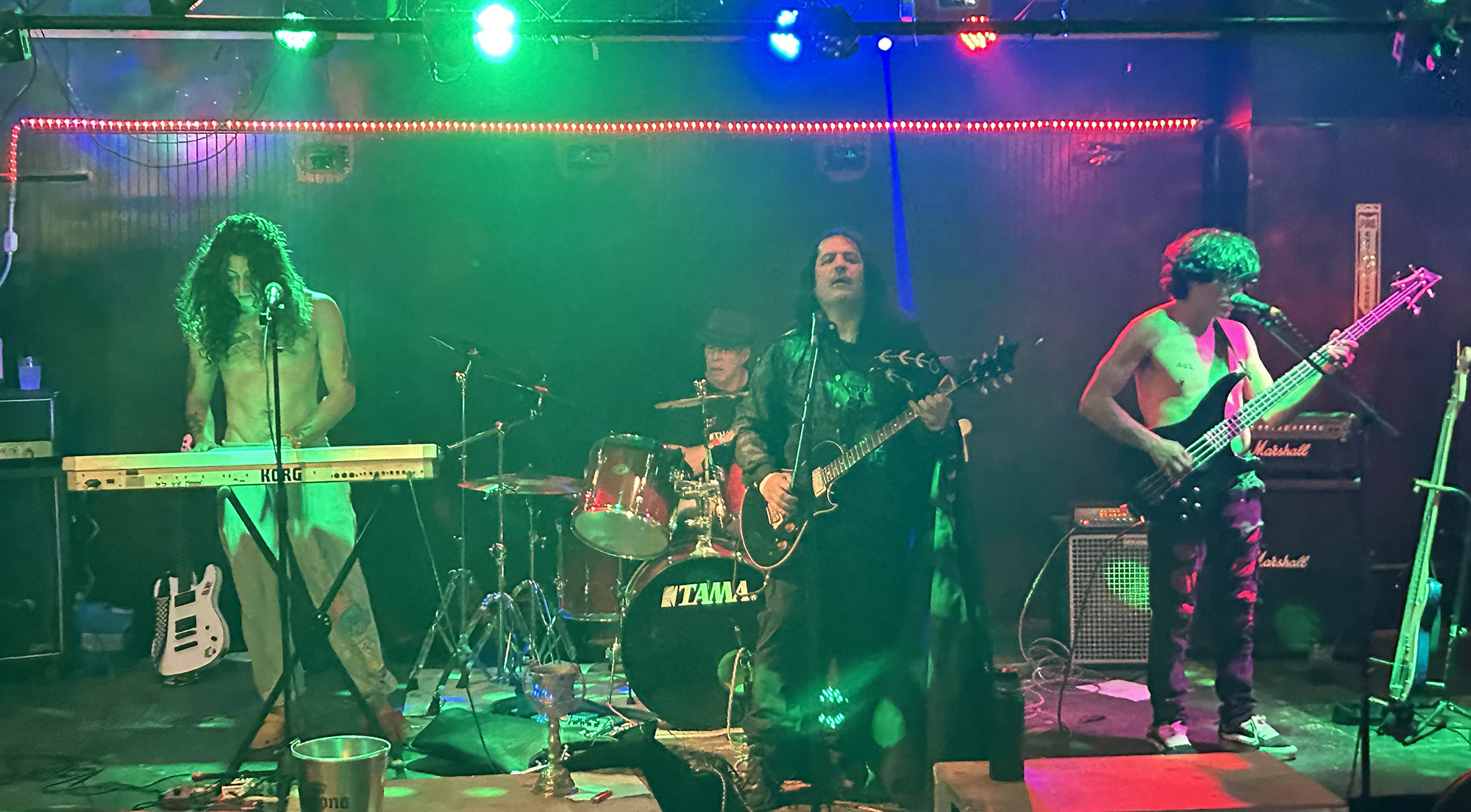
Imbolg (USA)
18th November 2026TABARNAC! / Neuraxis (Canada)
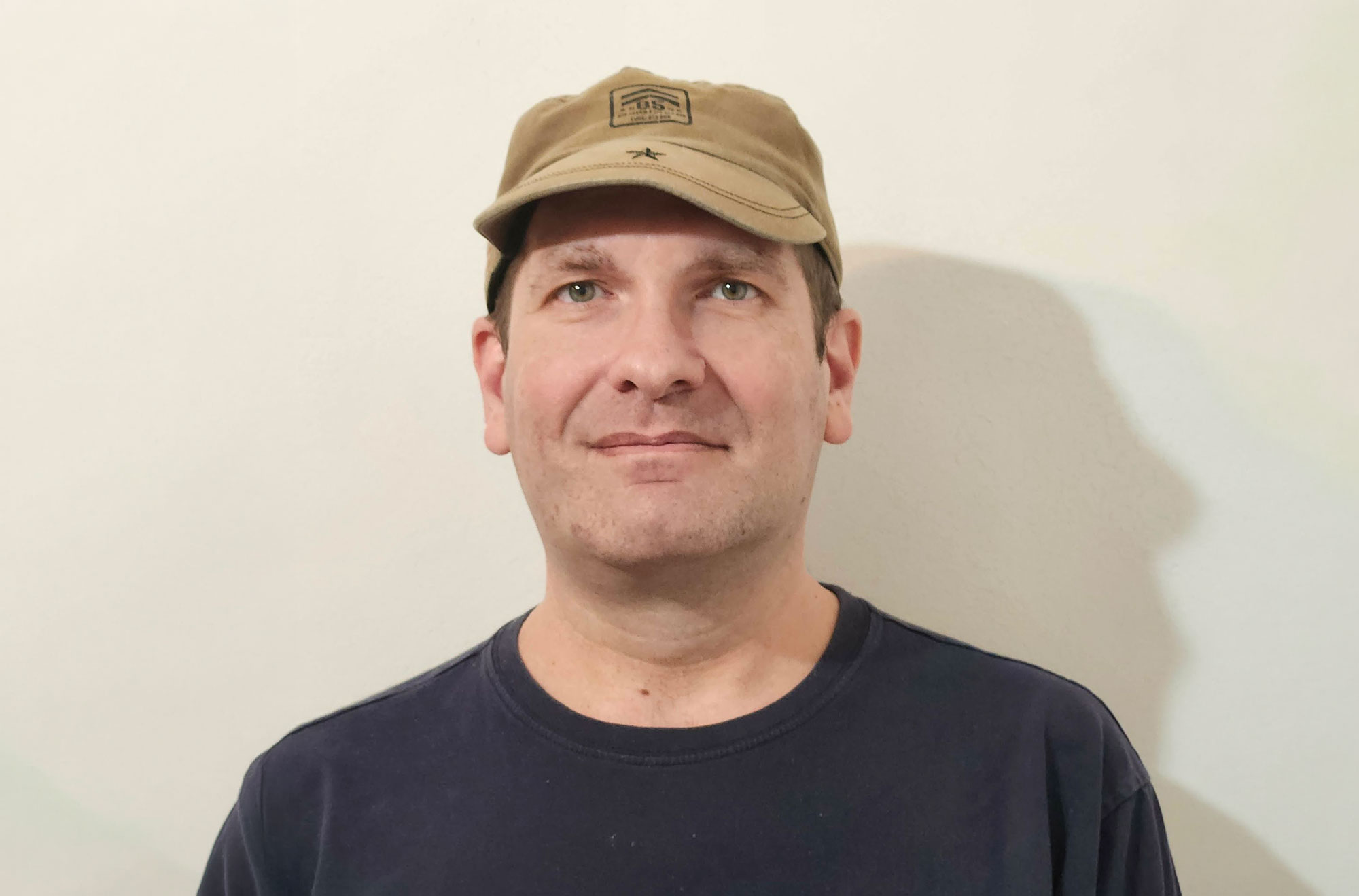
Interview with Ian Campbell (Author of “TABARNAC! – Quebec’s Full Throttle (1989-1997)” and former vocalist of Neuraxis
www.amazon.de/-/de/Ian-Campbell/
www.facebook.com/neuraxismetal
Between 1989 and 1997, Quebec’s underground music scene exploded into a global powerhouse that gave birth to extreme metal legends like Voïvod, Cryptopsy, Gorguts, and Kataklysm. Former Neuraxis vocalist Ian Campbell lived right at the epicenter of that chaos—and he has captured the era’s raw energy in his book, TABARNAC! – Quebec’s Full Throttle (1989-1997). We caught up with Ian to talk about documenting the rise of La Belle Province’s heaviest exports, surviving the tape-trading days, and the wild stories that defined a generation of Canadian metal. Dive into our full conversation below!
Metal Revolution: Before people knew you as the voice of Neuraxis or the guy writing the definitive history books on Québec metal, you were a kid in Rouyn-Noranda tape-trading, writing for Extreme Radiophobia, and putting on local shows. Take us back to that starting line—what was the moment you realized you didn’t just want to listen to this music; you needed to be actively building and documenting the scene around it?
Ian Campbell: For me, those two impulses came at very different moments. The urge to actually become part of the music came first. As a young metal fan, I had this almost instinctive need to imitate the vocalists I admired, especially Barney Greenway from Napalm Death and Sylvain Houde from Kataklysm. I wanted to understand how they produced those sounds, and naturally I started trying to do it myself. Over the years, that fascination gradually turned into me becoming a vocalist. The need to document the scene came much later, during my years with Neuraxis. I had developed this habit of sending ridiculously long emails to my bandmates about bands, shows, people, memories and different pieces of Quebec metal history. At some point, Rob, our guitarist, basically told me: “Why don’t you write a book instead of annoying us with these fucking long emails?” [laughs] He had a point.
What I gradually realised was that Quebec metal history was already documented, but in fragments scattered everywhere. It was in old fanzines, flyers, demo tapes, radio archives, photographs, newspaper clippings, people’s collections and, most importantly, in their memories. What was missing was something that brought all of those pieces together. That’s when I began to understand the need for actual history books that could condense all of this and tell the complete story, not only the achievements, but also the triumphs, fuck-ups and misadventures of the musicians from every band, the promoters, the media, the fans and all the other people who made the scene exist. Because a scene isn’t built only by the bands that eventually become famous. It’s built by everybody who was there.
MR: With TABARNAC!, you’re documenting the exact era—1989 to 1997—when you were right in the trenches living it. When you first sat down with boxes of old flyers, demo tapes, and zines to put this book together, did it feel more like doing objective historical research, or like opening your own personal time capsule?
Ian: There’s an important distinction there: I only really became active in the scene in 1997. So when I look back at the period from 1989 to 1996, I’m not revisiting it as someone who was already in the trenches. I’m looking back at my younger self, a metal fan growing up in a remote region of Quebec who didn’t know anybody in the scene yet. Those were my years of almost innocent discovery. I was flipping through Metal Maniacs and French magazines like Hard Rock and Metallian, trying to absorb everything I could, and going to my local record store to buy cassettes by bands like Carcass and Brutal Truth. The scene seemed very far away from Rouyn-Noranda in some ways. I was watching it from the outside and dreaming about it. So when I began researching TABARNAC! decades later, opening those archives definitely had the feeling of opening a time capsule, but not necessarily my own time capsule. A lot of it was a world I had witnessed from a distance without understanding everything that was happening behind the scenes. And that’s one of the fascinating things about researching the pre-Internet era: the history exists, but you physically have to find it. It survives in personal archives, letters, correspondence, magazines, flyers, photographs, demo tapes, private collections, interviews and people’s memories. So much of that material was never digitized or put online. If somebody still has the original item in a box somewhere, you can document it. If nobody preserved it, part of that history may simply disappear. That made the research both personal and historical. I was rediscovering the years of my own musical awakening, but this time I could finally see the entire machinery behind the scene that my younger self could only glimpse from afar.
MR: You went from co-creating the first volume (No Speed Limit) with Félix B. Desfossés to authoring TABARNAC! yourself, covering the exact years (1989–1997) when you were actively coming up in the scene. How difficult was it to step outside your own memories and evaluate an era you were personally living through?
Ian: Again, I would make a small distinction here. I wasn’t an active participant in the scene throughout the entire 1989–1997 period. For most of those years, I was still experiencing it as a young fan from Rouyn-Noranda, discovering bands through magazines, tapes, record stores and whatever information could reach me. 1997 is really when I started becoming actively involved. In a way, that distance actually helped me later as a researcher. One thing I learned while working with Félix B. Desfossés on No Speed Limit is that memory is incredibly valuable, but memory is not necessarily history. People can remember the same concert, band, incident or period very differently. Thirty years later, dates get mixed up, different events merge together, and sometimes a story has been repeated so many times that the legend becomes stronger than what actually happened. So with TABARNAC!, I tried not to treat my own memories as being more authoritative simply because they were mine. My memories gave me questions to investigate, but whenever possible I wanted the documents from the period to speak as well: flyers, fanzines, magazines, demo tapes, letters, photographs, advertisements, newspaper articles, correspondence, interviews and personal archives. When several witnesses remembered something differently, that contradiction itself could sometimes be interesting. People don’t experience a scene in exactly the same way. My responsibility was not to write “Ian Campbell’s version of Quebec metal history.” It was to bring together as many pieces as possible and reconstruct a collective history from them. And honestly, that is one of the things I love most about this work. You begin with a memory, then you start digging, and sometimes what you discover is much bigger, stranger or more complicated than what you remembered.
MR: While digging through old flyers, demo tapes, and fanzines for TABARNAC!, what was a moment or band from the 1990s that you completely missed while you were busy living it, or one whose impact looked totally different in hindsight?
Ian: Two things really stood out to me during the research: the Poliwog festival and GrimSkunk. I obviously knew about both of them, but researching TABARNAC! completely changed my understanding of their actual impact. With Poliwog, what struck me was how important that festival had been in exposing so many young Quebecers to alternative and underground music. Looking back, I realised that it wasn’t simply a series of shows or a festival people remembered fondly. For a lot of young people, it was a gateway. It introduced them to a culture and a musical world that many of them would remain involved with for years afterward. That was something I hadn’t fully understood while it was happening.
GrimSkunk was a different kind of revelation. I already knew perfectly well how important they were in Quebec. Their influence here was impossible to miss. What surprised me during the research was discovering the extent of their popularity outside Quebec, particularly the amount of touring they had done in Europe and the United States. It made me realise how easy it is to misunderstand the scale of something when you’re standing inside it. As a young fan in Rouyn-Noranda, I could see pieces of the story through magazines, records, tapes and whatever information reached us. Decades later, doing the research, I could finally step back and see the larger map. That is one of the things TABARNAC! taught me personally: sometimes you think you know the history because you lived during the period, and then the archives show you how much of the story was happening outside your field of vision.
MR: Before writing books, you co-founded the Extreme Radiophobia fanzine and promoted shows in Rouyn-Noranda. How much of that 1990s tape-trading and zine-making ethos shaped how you track down sources and verify history today?
Ian: I think that DIY mentality still shapes almost everything I do as a researcher.Back then, if you wanted to discover a band, you had to make an effort. You wrote letters, traded tapes, ordered demos, bought fanzines, exchanged addresses and information, and talked directly with people. Nothing arrived instantly, and there was no single place where all the information existed. In many ways, researching TABARNAC! required me to return to that same mindset. The Internet is obviously useful today, especially for locating people, but for the period I’m documenting, the real history often still exists in physical form. It can be sitting in somebody’s basement or in a box that hasn’t been opened in thirty years: an old flyer, a handwritten letter, a demo cassette, a fanzine, a photograph, a magazine, a concert ticket or some forgotten correspondence. So I approach the research almost like tape trading used to work. You find one person, that person leads you to another person, who remembers somebody else, who might still have the original document you’ve been looking for. And then you cross-reference everything.
A testimony is extremely valuable, but whenever possible I want to compare it with contemporary material and with what other people remember. Sometimes a simple flyer can settle a date that three people remember differently. I also think the fanzine mentality taught me something else that remains fundamental to TABARNAC!: don’t wait for somebody else to document your culture. If the information isn’t collected somewhere, go find it. Talk to the people. Dig through the boxes. Preserve it yourself. That DIY instinct is probably the strongest connection between the kid involved with Extreme Radiophobia and the person writing these history books today.
MR: People outside the province often associate Québec metal solely with Montréal, yet cities like Rouyn-Noranda (your own stomping ground) and Rimouski were massive crucibles for the scene. How did geographic isolation, harsh winters, and regional rivalries fuel the intensity of the music?
Ian: I would be a little careful with the idea of regional rivalries, because that isn’t really how I experienced it. What I remember much more strongly is geographical isolation and the necessity of doing things yourself. The French geographer Raoul Blanchard, who devoted a major part of his work to studying French Canada and Quebec, wrote extensively about the relationship between people and the physical environment here. There is a word associated with his descriptions that I find particularly appropriate: brutality. And that word works remarkably well for Quebec metal.
The brutality here isn’t monotonous. It changes form. You have enormous contrasts in landscape, distance, seasons and temperature. During winter, lakes and rivers freeze, and ice becomes a defining feature of Quebec’s waterways and even the St. Lawrence estuary. I like to think that the same idea applies metaphorically to the music: variety within brutality. Quebec bands could be extremely aggressive while approaching that aggression in radically different ways. Voïvod didn’t sound like Gorguts. Gorguts didn’t sound like Cryptopsy. Obliveon had another identity altogether. The brutality was there, but so were experimentation, technicality, atmosphere, melody and progressive ideas. Growing up in a regional city like Rouyn-Noranda also meant that you couldn’t simply assume the scene would come to you. The distance forced you to become resourceful. If you wanted shows, sometimes you had to help organize them. If you wanted information, you searched for it. You bought magazines, exchanged tapes, contacted people and gradually built connections with Montreal and elsewhere. So for me, geography created necessity more than rivalry. And necessity is an incredible creative force. When you are far from the centre, you either wait for something to happen, or you build your own fucking scene.
MR: TABARNAC! puts heavy emphasis on the infrastructure—rehearsal rooms, local radio shows, indie record shops, and tiny studios—rather than just the marquee bands. If you had to point to one specific venue, studio, or behind-the-scenes figure from the ’90s that held the whole ecosystem together, who or what would it be?
Ian: Honestly, I would have a hard time naming only one, because doing that would almost contradict one of the main ideas behind TABARNAC!: a scene exists because an entire ecosystem of people and places keeps it alive. On the promoter side, I would definitely mention Stephan Mellul and Brave Concerts International, or BCI, in Montreal. Promoters were essential because somebody had to take the financial and logistical
risks of actually bringing bands together and putting shows on.
For radio, Simon Girard, Danko Todorov and Christine Fortier are names that come immediately to mind. Radio was incredibly important at a time when there was no streaming and no social media. A show could introduce you to a band you might never encounter otherwise. For studios, I would mention Victor studio in Montréal, Wild studio in St-Zénon and Northern studio in Abitibi. These were places where the music stopped being something that existed only in rehearsal rooms and became something people could actually hear, trade and preserve. If you ask me about venues, Les Foufounes Électriques in Montreal has to be part of the conversation. A venue isn’t simply four walls and a stage. It becomes a meeting point where musicians, promoters, fans and different underground communities cross paths. And then there were the record stores. I deliberately wouldn’t single out just one. Every record store that made room on its shelves for metal in all its forms contributed to the ecosystem. Those stores were places of discovery.
The same goes for fanzines. Sang Frais magazine and its editor, Louise Girard, are important examples of people documenting the culture while it was actually happening. So if you force me to choose the one thing that held everything together, my answer would actually be: the network itself. The promoter needed the venue. The bands needed the studios. The radio hosts and fanzines helped people discover the music. The record stores put it into their hands. The fans bought the records and went to the shows. Remove enough pieces from that chain, and eventually you don’t have a scene anymore.
MR: The Québec sound. You’ve previously noted that Québec bands naturally blended extreme technicality and brutality with progressive structures and emotional hooks. Looking at the lineage from Voïvod and Obliveon to Gorguts, Cryptopsy, and Neuraxis, why do you think that specific hybrid took root in Québec rather than anywhere else in North America?
Ian: I’m not even sure I would say there is a single “Quebec sound.” I think there is something more interesting than that: a Quebec way of creating music. By the end of the 1980s, Quebec metal had already travelled through an incredible variety of musical directions. You can draw a line from Aut’Chose to Voïvod, and eventually all the way to Gorguts, but those artists sound nothing alike. That diversity is precisely the point. Voïvod had already demonstrated that a Quebec band could be strange, progressive, challenging and completely personal without following anybody else’s rules. That was tremendously important. It showed that originality wasn’t something you had to apologise for. Quebec metal never became simply a copy of Florida death metal, New York hardcore or Bay Area thrash. Those influences obviously reached us, but they could collide here with progressive music, jazz, punk, hardcore and all kinds of other ideas.
By the early 1990s, something really exploded. Thrash and death metal became major creative forces, with hundreds of bands eventually moving through those worlds. There was an extraordinary growth in technical ability, concepts, sound and lyrical ambition during the years before the Internet. And once local bands began developing truly distinctive identities, I think that gave the next generation permission to experiment even further. The interesting competition wasn’t necessarily: “How can we be more brutal than the band next door?” Sometimes it was closer to: “What can we do that the band next door hasn’t already done?” That difference matters. You can hear it in Voïvod, Sword, Obliveon and Gorguts, and then in bands like Anonymus, Necrotic Mutation, Kataklysm, Cryptopsy and many others. They were part of the same broad cultural movement, but they weren’t trying to produce the same music.
By 1997, Quebec metal had become an artistic movement in its own right. Quebec was no longer simply “that place Voïvod came from.” The scene had multiplied in every direction, technically, conceptually and stylistically, and some of those bands were now reaching audiences internationally. So maybe the real Quebec sound is that there is no single Quebec sound. It is an attitude toward creation: be audacious, absorb whatever influences make sense to you, push your musicianship as far as you can, and don’t worry too much about fitting neatly into somebody else’s category. To connect it with something I said earlier, perhaps the best description is still: “Variety within brutality.”
MR: Neuraxis formed in 1994—right in the middle of the TABARNAC! timeline—and you stepped in as vocalist a few years later during a pivotal shift toward technical death metal. What was it like going from being a fan, zine writer, and local promoter in Abitibi to fronting one of the bands carrying Québec’s banner internationally?
Ian: Honestly, I didn’t make some grand decision to go from being a fan and promoter in Abitibi to fronting Neuraxis. It happened almost by accident. In July, Chris Alsop couldn’t make two Neuraxis shows that were scheduled in Abitibi. I was promoting the Rouyn-Noranda date, and I wasn’t about to cancel the shows. So the simplest solution was also the craziest one: I stepped in and sang for them myself. At that point, I was basically an emergency vocalist. A few months later, Chris played his final show with Neuraxis at the Spectrum in Montreal, opening for Emperor. Since I had already filled in for the band in Rouyn-Noranda, it became fairly natural for Neuraxis to ask me to continue for a few more shows. The funny part was that I still wasn’t prepared to move to Montreal. Not yet. So there wasn’t really a moment where I thought, “Now I’m going to become part of a band representing Quebec internationally.” I was still thinking much more simply: What’s the next show? What do I have to learn? How do I make this work?
My background as a promoter and fanzine guy probably helped, because I already understood that a band was much more than what happened onstage. I knew how much work went into booking shows, promotion, logistics and keeping things moving when something went wrong. And this is a perfect example: something went wrong, so we found a solution. Vocally, I brought something different to Neuraxis as well. My voice wasn’t as deep or as shrieking as what the band had explored before, and gradually I found my own place within their music. I was also very focused on stage presence and on using the vocals to help give the songs a stronger narrative dimension.
Eventually that lineup was able to focus on creating A Passage Into Forlorn, which we recorded in 2000 under circumstances that were still very much rooted in where I came from: in the basement of the Dépanneur Principal in the village of Macamic, in Abitibi-Ouest. There’s something beautifully fitting about that. I had started as a kid in a remote region of Quebec reading metal magazines and buying tapes, then became a local promoter who refused to cancel a couple of shows, and somehow that road eventually led to recording and touring with Neuraxis. At the time, though, I don’t think I understood the historical significance of any of it. You rarely realise you’re living through “history” while it’s happening. You’re too busy trying to make the next fucking thing work. Today, looking back as a historian, I can see the trajectory much more clearly.
MR: From local tape-trading to global touring. Between the 1990s era covered in your book and your years recording albums like Truth Beyond… and Trilateral Progression with Neuraxis, the underground went from physical demo cassettes to the early internet era. How did that shift change the camaraderie and hunger within the local scene?
Ian: I think we gained an enormous amount with the Internet, so I don’t want to romanticize the old days too much. In the tape-trading era, the biggest problem was finding the music. You had to search for it. You discovered a band in a magazine or fanzine, found an address, wrote a letter, waited for an answer, sent money or another tape, and then sometimes waited weeks for something to arrive in your mailbox. Because it required that much effort, every discovery felt important.
There was also a human connection built into the process. You weren’t simply acquiring music. You were corresponding with somebody, exchanging recommendations, addresses, flyers, opinions and sometimes eventually friendships. Then the Internet completely changed the equation. Suddenly communication became almost instantaneous. For bands, that was an incredible advantage. You could communicate with promoters, labels, musicians and fans outside Quebec much more easily. The distance between a local underground scene and the rest of the world became much smaller. But abundance also changed our relationship with discovery.
Before the Internet, the problem was finding the music. With the Internet, the problem gradually became finding enough time to listen to everything you could suddenly access. I think some of the hunger changed because of that. When something is difficult to obtain, you naturally invest more of yourself in finding it. When thousands of bands are immediately accessible, individual discoveries can become more disposable. But I don’t believe the camaraderie disappeared. It changed form. The old underground was built through letters, tapes, fanzines, record stores and face-to-face relationships. The emerging Internet underground could suddenly connect people internationally at a speed we had never experienced before.
For a band like Neuraxis, that transition opened enormous possibilities. So I don’t see it as one era being better than the other. One gave us scarcity, patience and very personal relationships. The other gave us access, speed and international reach. I was fortunate enough to experience both. And looking back today, I think the most important thing is understanding what each era made possible, and what each era inevitably left behind.
MR: Translating the legacy. With the English edition of TABARNAC! reaching an international audience, what is the biggest misconception outsiders still have about why Québec produced so many world-class extreme metal bands—and how do you hope this book corrects the record?
Ian: I think the biggest misconception is that Quebec somehow produced all these world-class metal bands in isolation, almost as if Voïvod, Gorguts, Cryptopsy or Kataklysm suddenly appeared out of nowhere. They didn’t. Quebec didn’t simply produce great bands. It produced a scene, and those bands came out of that scene.
Behind every internationally recognised band were dozens of other bands that never reached the same level of visibility. There were promoters willing to take risks, radio hosts playing demos, people producing photocopied fanzines, record stores stocking extreme music, small venues willing to book shows, studios recording bands with very little money, photographers, journalists, tape traders and, of course, the fans who actually showed up. That entire infrastructure matters.
I hope TABARNAC! helps international readers understand that when they listen to a band like Gorguts or Cryptopsy, they are hearing the visible result of a much larger cultural environment. And as we discussed earlier, I don’t really believe there was one specific “Quebec sound.” What existed was more of a Quebec way of creating music: being audacious, absorbing different influences, pushing musicianship forward and not being afraid to sound different from the band next door.
The English edition is especially important to me for that reason. For the first time, people outside the French-speaking world can access much more of the context behind the names they already know. If someone finishes TABARNAC! knowing more about Voïvod, Gorguts or Cryptopsy, that’s great. But if they also remember a forgotten demo band, a fanzine editor, a radio host, a promoter, a record store or a tiny venue they had never heard of before, then I think the book has really accomplished what I wanted it to do. Because those famous bands are part of the story. The scene is the story.
MR: After spending years digging through the trenches of 1964 to 1997 across two massive books, does the archivist in you feel like the story is finally told—or are you already eyeing the late ’90s and 2000s era that you and Neuraxis helped define?
Ian: Not even close! The archivist in me definitely doesn’t feel that the story is finished. In fact, I’m already working on the next chapter, Légitime Défonce, which will cover the Quebec metal scene from 1998 to 2008. And that period presents a very different challenge for me. With the earlier history, I often had to reconstruct a world that I had either experienced from a distance or discovered through other people’s archives and memories. But as the timeline moves into the late 1990s and 2000s, the closer it gets to my own life, the harder it becomes for me to disappear behind the historian.
Those are the years when I became much more deeply involved in the scene myself, including my time with Neuraxis, organizing shows and eventually experiencing the international side of the underground firsthand. But Légitime Défonce cannot become “the Ian Campbell and Neuraxis story.” That would completely miss the point. Just like TABARNAC!, I want the next book to document the whole ecosystem: the bands everybody remembers, the bands people have forgotten, promoters, venues, studios, labels, record stores, radio shows, media, tours and the people working behind the scenes.
The period from 1998 to 2008 is also fascinating because the rules begin changing dramatically. The Internet becomes increasingly important, communication accelerates, international connections become easier, and Quebec bands gain new opportunities to tour and reach audiences outside Canada. So the next book will inevitably be more personal for me, but that also means I have to be even more disciplined. I have my memories, but so does everybody else. My job is still to collect those different perspectives, compare them with the surviving documentation and try to reconstruct the larger story. So no, I’m definitely not finished. I think I’ve just reached the part of the story where hiding behind the historian becomes impossible.
MR: Ian, thank you for not only helping build the soundtrack to Québec’s extreme metal scene, but for doing the heavy lifting to make sure none of it gets forgotten. Where can people grab a copy of TABARNAC! and keep up with what you’re doing next?
Ian: First of all, thank you. I really appreciate those words. The English edition, TABARNAC! – Quebec’s Full Throttle (1989–1997), is available through Amazon, including Amazon.de for European readers. The original French edition, TABARNAC! – L’Québec à Fond (1989–1997), is also available again for French-speaking readers. As for what comes next, I’m already deep into the research and writing for Légitime Défonce, which will continue the story of Quebec metal through the 1998–2008 period. That next chapter is going to be particularly personal for me because it moves directly into the years when I became much more involved in the scene myself, including my time with Neuraxis. But just like TABARNAC!, it won’t simply be about the famous bands. I want to keep documenting the entire ecosystem and preserve the stories of the people who made it possible. The easiest way to follow what I’m doing is through my social media, where I regularly share updates about the books, research, archival discoveries and interviews.
Ultimately, I hope people don’t just buy TABARNAC!. I hope they read it, discover a band they’ve never heard before, search for an old demo, fall down a rabbit hole and keep that history moving forward. Because once somebody discovers one of those forgotten bands again, the archive becomes alive.
MR: Thanks again for doing this, Ian—and for sending that signed copy my way. I’m counting down the days until it arrives so I can tear right into it!
Ian: My pleasure, brother, and thank you for giving me the space to go this deep into the story. I really enjoyed these questions because they went far beyond simply talking about a book. They gave me a chance to reflect on the people, places and memories behind it, and ultimately that’s what TABARNAC! is all about.
I hope you enjoy the signed copy when it reaches you. And if the book sends you down a few rabbit holes looking for forgotten Quebec bands and old demos, then I’ll consider my mission accomplished! Thanks again for the support and for helping keep this history alive. Metal greetings from Quebec!